

- Pros: Exotic or God-tier performance, bone conduction that adds new tactile spatial elements plus bass for an entirely new listening experience that you can feel, best-in-class clarity and detail plus bass, full-sized performance.
- Cons: Not cheap.
The Xenon 6 (Xe6) is Fir Audio’s next generation of their extremely popular M5, one of the best in-ears of all time when it was launched. However, listening to both side-by-side, there is little similarity between the two signatures other than both offering exotic performances that put them above the top tier. I will undoubtedly keep both to offer two different signatures to enjoy my music library – the Xe6 is more euphonic and 3D with the M5 being more transparent and traditional sounding.
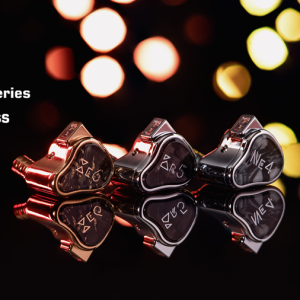
The M5 won a spot in the God-Tier category due to its overwhelming AudioTiers membership phrase and was awarded my “If I Could Only Have One” award due to its versatility compared to the others in that category. I have a feeling that the Xe6 will gain its spot in the God-Tier category as well once everyone gets a chance to hear it. Yes, we have a tour so that you can hear this IEM as well as the Kr5 and Ne4 in the Frontier Series as well – we want to hear what you think.
Tour: Fir Audio Frontier Series – Xe6, Kr5, Ne4
For those that do not know me, I am active on AudioTiers and HEADFI under the username “Barra” and have been hosting product tours for almost a decade now. During this time, I have been able to hear all the greats and experienced the evolution of CIEMs/IEMs and all the associated equipment. From that experience, I can say without a doubt that Fir Audio has always been on top of all the lists in terms of performance and unique tuning capabilities. I have managed several tours for Fir Audio and am very excited to now offer another 2022 flagship tour for the Frontier Series. To sign up and to hear the Xe6, Kr5, and Ne4 for yourself, please go to the tour thread and follow the instructions: https://audiotiers.com/tour-fir-audio-gen2-frontier-series-ciem-lineup-xenon-6-krypton-5-neon-4/.
As always, my goal is not to just offer my opinion but to offer tours so you can hear this equipment for yourself. If you are not already an AudioTiers tour member, please go to AudioTiers.com and follow the instructions in the “Getting Started” box on the Tours page: https://audiotiers.com/tours/.
Fir Audio Frontier Series Tour Kickoff Video
The Fir Audio Family
Fir Audio is a premium CIEM manufacturer out of the US that has a full lineup of premium IEMs and custom IEMs and is a longtime favorite on HEADFI and AUDIOTIERS. Their lineup has always made the top of the charts in performance including the M5, M4, as well as their Five x Five. To learn more about Fir Audio, their new Frontier Series, or to purchase the Xenon 6 from this review, please visit their website at: https://www.firaudio.com.

The Fir Audio Xenon 6
The Xenon 6 is Fir Audio’s new flagship IEM available in both universal-fit and custom-fit models.
Configuration
The Xenon 6 comes equipped with 6 drivers – one 10mm dynamic driver for lows which is fed into a Kinetic Bass port, 4 balanced armature drivers (1 bass, 2 mid, 1 high), and an electrostatic driver (EST) for the ultra-highs. This differs from the M5 that proceeds it on two counts – an extra BA for bass, and the Kinetic Bass port. This is enough to create an entirely new experience. The M5 is rated for 6.8ohms with a frequency range of 10hz – 20 kHz whereas the Xe6 is rated at 28ohms with a frequency range of 20hz -20khz although the Xe6 feels like it would be the one that digs into the 10hz range due to the kinetic feedback.
Several technologies are associated with the Xe6 including Kinetic Bass, Atom Venting, Open Acoustics, and Rigid Technologies. I believe that the Kinetic Bass and the Rigid Technologies are the only two new technologies that differentiate it from the M5 with Kinetic Bass being the star of the show. The Atom Venting is a key technology for me as it allows me to turn up the volume more without hurting my ears allowing a more dynamic sound in exchange.
Universal vs. Custom
As you can see from the picture above, the universal build on the Frontier Series is smoking hot – it even looks better in person. However, the custom options are stellar too – a huge improvement in options and appeal since I ordered my custom M5. You can see how beautiful the results were from my build experience – and yes, the other options were great enough that I often second-guess myself having desired several available options.
The universal format of the Frontier series all has a heft to them and a nice universal fit where I was able to get the majority of the performance offered by these monitors. While some may have perfect ear canals to get full performance from a universal, I do not so I did experience better performance from the custom version. This may be even more important for a bone conduction design as the tight fit that my custom offered me provides better contact with the bone conduction port which provides me with a lift in the effect vs. the universal option.
Fit
Based on the bend I have in my inner ear, I can only use the soft silicone tips to get a good seal, so I have not explored any other options. However, the seal provides great performance from the traditional sound port but does not affect the contact from the bone conduction port which is all about the fit of the universal paired to your outer ear. Therefore, your mileage may vary based on these considerations.
Build
There is not much to say about a custom in-ear other than you can expect to get what you design and those premium manufacturers like Fir Audio put out stellar quality as you might expect. More importantly, Fir Audio has nailed all my custom designs in fit as this is the reason that I go custom…nailed it. Also are choices and ease of design which Fir Audio nails as well. Other than that, most manufacturers create a plastic form-fitting insert other than a very few that do silicone, and we can inspect for bubbles and imperfections which there are none in my Xe6 which is perfect.
The size characteristics change between manufacturers with my Empire Ears being the smallest custom and 64 Audio being my largest with Fir Audio being a comfortable middle. There are advantages to each, but my preference is the size middle ground like Fir Audio with a tighter fit but small enough that I can forget that it is in my ear. I also appreciate the Atom-X venting and how it is seamlessly integrated. Some other manufacturers can make this vent pop out and catch on things which is not a problem here. Venting is important to me as discussed elsewhere so better integration is also important to me.
The design is beautiful having chosen their “Purple Leaf” faceplates as seen below. It was simple to create my design using the interface shown below which is loaded with premium choices and offers a WYSIWYG design flow. This allowed me to see and perfect my choices throughout the process with the flexibility to go back and make changes. You may also notice from the picture that there is now a 2-pin option that was not available when I created my M5 design. This 2-pin option allows me to roll cables now without the need for a unique adapter.

Where there is a big build consideration is in the universal design. The Xe6 metal design is so beautiful that it is tempting for even me to choose this over the custom design to gain that unique build characteristic. However, in the end, when comparing the sound, I am sure that the custom was a better option for me and my signature preferences. It is worth joining our tour just to be able to look at the build quality of these IEMs.

In the end, I am very satisfied with the design I created and love the nice tight fit that offers optimal sound without the chance of breaking my seal. Even better, I have perfect contact with the bone conduction port offering the best Kinetic experience.

Unboxing
What’s in the box? The box looks very commercial and professionally done…as you might see in a big box retail store. This is getting more common, but I have received many in a pouch with no packaging so I still appreciate a good box experience.

The unwrapped box gives way to a slipcover to reveal a heavy-weight cardboard cover box with your contents.

Slipping the cover off reveals your in-ears along with a Fir patch and some instructions.

Removing the top foam that holds your in-ears, beneath resides your case.

As you can see, the case holds not only your in-ears but has all the required tools held within. Of key importance is that you are provided with three options for your venting system offering a variety of signatures. The effect typically allows you to have the most bassy to least bassy option with a middle ground to choose from.

The Xenon 6 Sound
The name AUDIOTIERS comes from my attempt to offer performance tiers to provide perspective on the various in-ear offerings and the surrounding gear that we are touring. While we have hosted mid-tier and some entry-tier IEMs, we have mostly focused on the top-tier offerings with some mid-tier options for those who don’t wish to pay flagship prices. The best of the best are termed exotics for their ability to be unique and stand above the crowd. The top 5 of the exotics are awarded GOD-Tier status. The Xenon is likely to take its place among those 5 GOD-Tier IEMs.
To describe the Xenon signature in a nutshell – it has the character of the Abyss full-sized exotic headphone. There is a clarity to the signature, but it is also euphoric and thick even though that sounds contradictory. While it is not the HD800-sized soundscape, it is large or full-sized in stature offering ease in hearing all the details that it serves up in gobs. While there are finer details like you might find in the HD800 presentation, it is more about sensory details and ambiance – that “being there” experience makes it feel warmer and more tube-like. Where the Xenon 6 stands alone is in the kinetic feedback that offers something new…a sound that you can feel as well as hear. This is different than other bone conductive earphones that I have heard/felt, in that it carries a broader frequency and in a more defined, clearer way that brings transparency with it. You have to hear it to know what I mean, so please join the tour.
Optimizing and Pairing

As I did not find either the Xenon 6 lacking in any area, I did not feel that rolling cables at this point would be a benefit. The stock cable is wonderful and the resulting sound is more than satisfactory. So this optimization section is mainly about pairing given that we have all already made investments in gear that we would like to use with our purchases. My preferred DAPs are the Sony WM1a and the Calyx M as I have sold my AK and other DAPs that were not being used. The Hugo 2 rounds out my setup by offering top-tier performance using my Sony or iPhone as a source. My desktop DAC/AMP is the Burson C3R offering 7.5 watts of pure performance to test the limits of scalability. Based on experience, the C3R wattage scales my dynamic drivers to the extreme but is not necessary for BA-only setups. Here is what I found.
- iPhone 13 Max Plus: Amazon HD Music is a new app on my iPhone that has improved my sound quality considerably. From the standard Apple Music app, the Xe6 sounds great, but better on my better DAPs. The new Amazon app takes this up several notches and gets the iPhone closer to my dedicated DAPs mentioned below. The music discovery on the iPhone has made it my preferred method to listen to the Xe6 on the go. Either way, the music sounds full-sized from the iPhone, just more filled out with the Amazon app. But the dedicated DAPs are better overall. I just wish that I had access to the Amazon music app with these DAPs. As mentioned above, the only weakness of the iPhone is that in crowded or dynamic passages there can be some clipping at first. However, for whatever reason, the clipping seems to disappear, and the fullness of the note returns after the iPhone warms up with 15 minutes or so of constant playing. Of note is the need to turn up my iPhone to about 80 to 90 percent volume with the VE EXT vs. around 50 percent volume or less with the Xe6. The iPhone doesn’t feel colored in the signature offering a very revealing look at the Xe6 but may not extend to the extremes like my better sources. Ultimately, I would say that the Xe6 scales up better than it scales down but is extremely good on lower-end devices as well.
- Calyx M: The Calyx M is famous for its sound quality implying that the 9018 is responsible. While the stats don’t speak to this, the amp is likely to be the bigger influencer burning up a giant battery in less than four hours to meet that quality output. The clarity and transparency offered in the colder Calyx M signature offer more detail than the Sony below. In comparison, I used to like the Calyx M better than the Sony until I got a custom firmware upgrade on the Sony. The Calyx takes the audiophile performance up a notch with more and tighter detail, while Sony can be more fun. An advantage the Calyx has over Sony is that volume slider that allows me to perfect the volume for each song instantly and to play the Xe6 louder than normal for short bursts. This is more important for the Xe6 vs. my other non-vented IEMs as the ATOM system allows me to play louder without damaging my ears. The clarity of the Calxy M boosts the detail even more on the Xe6 and the powerful amp boosts the texturing. The M is a great pairing with the Xe6 offering a slightly different signature than the Sony which comes across as warmer and punchier. The Xe6 loses some of the tube-like euphonics on the M offering more clarity and finer details.
- Sony WM1a: The Sony was almost sold last year as it didn’t pair well with my CIEMs until I got the new custom firmware. The new firmware now plays nicely with all my CIEMs. The Xe6 pairs great with the Sony offering retaining its warm tint to its performance with a nice girth to the note and more resonance and textures. The Sony with its superior battery life and UX is my go-to DAP for the Xe6. The Xe6 signature is not colored on the Sony sounding as expected due to both having similar characteristics. In the end, the Xe6 sounds fantastic on Sony.
- Hugo 2: The H2 takes the experience up significantly on the Xe6 with a better DAC and AMP. The pairing is more in line with the Calyx M but on steroids. The bass comes out more – but cleaner with sharper edges and the fine detail is at another level. With the H2, the sound also gets fuller – more euphonic. However, as with the M, the H2 brings out the clarity/transparency of the Xe6 making it sound faster for more of an audiophile sound rather than the more fun Sony. The problem with the H2 is that it is a stack that is not always convenient, so this is not as normal of a pairing as the Burson C3R which takes it up even another notch given the additional driving power if I have to deal with the inconvenience. The Xe6 performance is significantly improved with the H2 with an additional gob of detail and is a wonderful pairing.
- Burson C3 Reference: Going desktop, the Burson C3R is my favorite pairing supersizing the overall SQ significantly and in a fun musical way that crushes the Sony. It should also be mentioned that I am employing the Amazon HD Music application as a source and running it through my Sonarworks True-Fi application tuned to my HD800 headphones which work well with the Xe6 signature. Playing through iTunes with True-Fi turned off brings down the sound quality noticeably, so some may consider this a cheat. Regardless, the C3R drives 7.5 watts into the Xe6 and offers a significant boost to the low end with more punch and more clarity. While the C3R is slightly warmer than the H2, not by much. The soundstage also grows with the C3R. A traditional BA configuration such as the VE PHöNIX doesn’t handle the power boost as well having to keep the volume down to 1 out of 100 or it can sound overdone whereas the Xe6 loves the additional overhead to drive the dynamic driver as well as to bring out more detail from the ESTs. My conclusion is that the Xe6 grabs another boost in detail and soundstage with a quicker bass note offering peak performance – it is the best I have heard the Xe6 sound.
Overall, I find that the hybrid/tribrid offerings like the Xe6 sound their best when offered more power overhead and a more detailed, higher-end DAC such as with my desktop setup. While the Xe6 sounds great scaled down to the iPhone, it would be a shame to not let the Xe6 reach its full potential on a desktop system as well.
Comparisons

The comparisons offered below are of the Fir Audio M5 for those choosing within the Fir Audio brand and of Vision Ear’s new PHöNIX and EXT flagships which seem to be the most commonly requested comparisons within the HEADFI community. To compare the custom Xe6 to the other IEMs, we used the sources described in the previous section. My music ranges from EDM to classical to rock to metal to pop to new age and easy listening – yes, I am all over the place. My preference in listening and comparison testing is to play all genres randomly to jolt my senses while getting a wide sampling of music. Here is what I found.
Fir Audio M5
The M5 is very different in signature than the Xe6. What they have in common is a very full-sized sound for a “being-there” experience and ginormous bass that is textured and life-like natural and exotic audiophile performance with gobs of detail. However, they offer this experience in two different signatures. The M5 can be considered more intimate while also having a wider soundstage with intimacy in the vocals and more space between instruments for transparency. The Xe6 of more tube-like romantic while retaining its clarity having more of a 3D involving soundscape with a new tactile feel to it. The Xe6 focuses more on atmosphere and the big picture while the M5 allows you to get up close and personal with the singer. I may be overstating the differences to create a meaningful comparison as they both offer a full experience, but the experience is different. The Xe6 has a fuller stage which makes it feel more compact, but it probably can be better described as round vs. the traditional large width of the M5. What I am getting at is that there is just more information provided with the Xe6 to listen to as it adds atmospheric clues. This additional 3d sense probably comes from that tactile feeling provided by the bone conduction technology. Different from other bone-conduction headphones I have heard, the Xe6 seems to bring out a sound that you can feel in the treble range as well. As for bass, they both have that huge dynamic driver, but the Xe6 adds both the kinetic port as well as an additional BA dedicated to bass. While the M5 is no slouch with bass, there is just more information in the Xe6 output. I would say that while they are both fast, the M5 feels faster and clearer than the bass on the Xe6 which adds a lot of atmosphere to the equation. However, the Xe6 is more fun. In the end, the Xe6 and the M5 will both have prominent spots in my IEM library allowing me to have two different exotic performance options to listen to my music library to hear it differently – win/win.

Vision Ears PHöNIX
The PHöNIX is Vision Ears’ new flagship in-ear replacing their previous ERLKöNIG flagship. The PHöNIX has already gained a huge fanbase given its exotic performance and is likely to replace the ERLKöNIG in AUDIOTIER’s god-tier 5 lineup. As a traditional BA configuration with 13 BAs, the PHöNIX is easier to drive than the Xe6 which is a tribrid boasting both a dynamic driver as well as ESTs plus a kinetic port which all take additional power. Regardless, both sound wonderful on my iPhone, and both scale considerably on better gear. They are both top-of-the-game, god-tier performers with different signatures to enjoy your music library.
What is different about the PHöNIX vs. the Xe6 is most notable in the bass response. While the PHöNIX enjoys that Vision Ears BA bass mastery, there is no comparison to the much more powerful Xe6 bass which compares closer to the Vision Ears EST while still surpassing the EST given the additional tactile Kinetic port. If you are looking for bass first, the Xe6 wins. However, the PHöNIX is more romantic than the Xe6 which is quite romantic itself. I often make the comparison between high-end solid-state and tube-like tuning where the solid-state has more transparency, faster notes with more contrast whereas the tube-like sound is more akin to warm, lush, and romantic. On that scale – 1 for solid-state and 10 for tubes, the PHöNIX is a 9/10 where the Xe6 is a 6/7, and the EXT being compared next is a 3/4. In the end, both the PHöNIX and the Xe6 are the best of the best with different signatures – the PHöNIX may appeal more to easy listeners and classical genres while the Xe6 will blow the mind of those that love more lively POP or EDM. The PHöNIX is one where you sip fine wine and relax whereas the Xe6 will get you up on the tables to dance. Your choice…

Vision Ears EXT
As mentioned above, this new co-flagship Vision Ears IEM is more solid-state in tuning offering an incredibly transparent experience backed by the second-best bass in the business. While the M5 could share that second-best bass title, it is more of an all-rounder where the bass is not as forward in the signature. The EXT doesn’t fool around, that bass is huge with a 10mm dynamic driver that is only beaten by the Xe6 due to that tactile kinetic bass port technology that takes it to the next level. However, the bass is not the full story with the EXT, it is an Elysium plus. The VE Elysium is known for its mids forward signature that is very unique and exotic in performance. The Elysium is my best of the best for mids, but this is the key focus there it is not an all-rounder, but it is my go-to vocals IEM. The EXT adds that incredible bass to the equation offering the full spectrum of sound taking it to flagship status making it one of AUDIOTIERS’ exotic class IEMs. These two IEMs are both exotic and offer stellar sound quality. They both offer full-sized sound and an extreme frequency range with the power to drive textures and detail from end to end. The difference is mainly in the clarity focus of the EXT vs. the euphoric richness of the Xe6.
To summarize, the EXT is more solid-state with a lively signature and an extremely awesome bass response, the PHöNIX is at the other end of the spectrum with a more laid-back, rich tube-like feel in comparison, with the Xe6 being somewhere in between with an additional level-up in a 3D atmosphere with a sound that you can feel. The Xe6 is closer to the PHöNIX than to the EXT in terms of lushness but retains that 10mm dynamic bass excitement of the EXT. Again, the PHöNIX wins for easy or traditional listening while the EXT and the Xe6 win for more dynamic genres such as POP or EDM. They all sound wonderful with all genres but have the tools to take their favored genres one step further. So what do you prefer, solid-state or tube-like signatures?

Concluding Thoughts
The Xe6 is sure to wow any listener as a unique listening experience and an easy recommendation for those who can afford it. They offer peak performance checking all the boxes of modern technology and easily reach my exotic performance tier and is a candidate for my god-tier award. The only concern is for a more laidback music listener as this is an extremely energetic IEM that makes you want to get up and dance vs. sit down and sip wine. Regardless, if you live in the US, then you are free to join our Fir Audio Frontier Series tour to hear the Xe6 as well as its lower-cost siblings the Kr5 and the Ne4 for yourself allowing you to decide for yourself – the way it should be.
